Wednesday 25th March 2026 - What a theatre trip revealed about Dr Jekyll and Mr Hyde
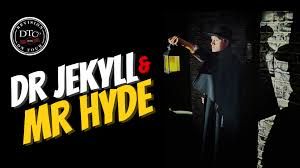
Yesterday, I had the absolute pleasure of visiting Birmingham Alexandra Theatre to watch the Dickens Theatre Company’s performance of Dr Jekyll and Mr Hyde. As an English teacher and examiner, I am always looking for ways to deepen understanding of texts beyond the classroom. What made this experience particularly valuable was the Q and A session afterwards with the actors and stage manager. I have to say, the insights shared were exactly the kind of thinking that pushes students into the top grades. If your child is studying Dr Jekyll and Mr Hyde, this is well worth a read.
Why didn’t they show Hyde’s face?
One of the most interesting questions asked by a student was why Hyde’s face was never fully revealed during the performance.The actor explained that this was a deliberate choice. Rather than focusing on Hyde’s appearance, he wanted the audience to experience the physical pain of transformation. He referenced Stevenson’s description of “hysteria in his muscles” and explained that Hyde is not simply evil but constantly suffering.He also pointed out that showing Hyde’s face could actually be anticlimactic. What matters more is the audience’s reaction, the discomfort, the fear, and the sense that something is deeply wrong.
Exam insight:
Students should always focus on effect. Stevenson is not just describing Hyde, he is creating a reaction in the reader.
Key quotations and why they matter
The actors shared some of their favourite quotations, including:
- “If he be Mr Hyde, I shall be Mr Seek”
- “The moment I choose, I can be rid of Mr Hyde”
- “Ape-like fury”
- “Unscientific balderdash”
One actor highlighted “If he be Mr Hyde, I shall be Mr Seek” as particularly significant. He suggested that it reflects the idea of a hidden self and linked this to repression in Victorian society.
Exam insight:
Top level answers do not just explain what a quote means. They explore what it suggests about society, identity, and the writer’s intentions.
The most important theme: repression
When asked about the central theme, the actors consistently returned to one idea, repression.Victorian society demanded respectability and self control, but Stevenson exposes the dangers of suppressing the darker side of human nature. The novella suggests that everyone has the capacity for both good and evil, and that denying this can have destructive consequences.
Exam insight:
Students should link their ideas to context, but not in a forced way. The best responses weave context naturally into analysis.
Is it a Gothic novel? Absolutely.
Another student asked how strongly the novella fits within the Gothic genre.The answer was clear, completely.The production emphasised key Gothic elements, including:
- The fog filled, shadowy streets of London
- Violent and shocking events such as the trampling of the child and the murder of Sir Danvers Carew
- A sense of instability during the Industrial Revolution
- The contrast between civilisation and savagery
The stage manager also explained how lighting was used to highlight contrasts such as light and dark, warmth and cold, mirroring the duality at the heart of the text.
Exam insight:
Students should recognise how setting, structure, and symbolism all contribute to meaning.
Why does Hyde take his own life?
One of the most thought provoking questions was about Hyde’s death.The actor’s interpretation was that Hyde is in constant pain, under increasing pressure from the police, and losing control. His death becomes a final act of rebellion and, importantly, an act of control.Rather than being captured, Hyde chooses his own fate.
Exam insight:
This is exactly the kind of interpretation that can elevate an essay. There is not just one answer. What matters is how well the idea is explored and supported.
Final thoughts: what students can learn from this
What struck me most about this experience is how closely the actors’ insights align with what examiners are looking for. Success in English is not about memorising quotations alone. It is about:
✔ Analysing the effects of language
✔ Exploring multiple interpretations
✔ Understanding context and themes
✔ Thinking about why a writer makes certain choices.
These are the skills that move students from a Grade 5 to a Grade 7, and from a Grade 7 to a Grade 9.
About the Dickens Theatre Company
The Dickens Theatre Company is known for bringing classic literature to life through dynamic, accessible stage adaptations. Their productions are particularly popular with schools, as they combine faithful storytelling with creative staging that helps students engage more deeply with key texts. They specialise in adapting well-known works from the GCSE and A level canon, including Dr Jekyll and Mr Hyde, A Christmas Carol, and other classic Victorian literature. Their performances often focus on clarity of narrative, strong characterisation, and atmospheric staging, making complex texts more memorable and easier for students to understand.Alongside their performances, they frequently offer post-show discussions or workshops, giving students valuable insight into character, themes, and interpretation. This makes their work not only entertaining but highly educational, supporting students in developing the analytical skills needed for exam success. I would recommend this to my students. FIND OUT MORE
Want help with Jekyll and Mr Hyde?
If your child is studying Dr Jekyll and Mr Hyde and would benefit from structured guidance, I run targeted sessions and masterclasses focused on exactly these skills.
Feel free to get in touch to find out more.
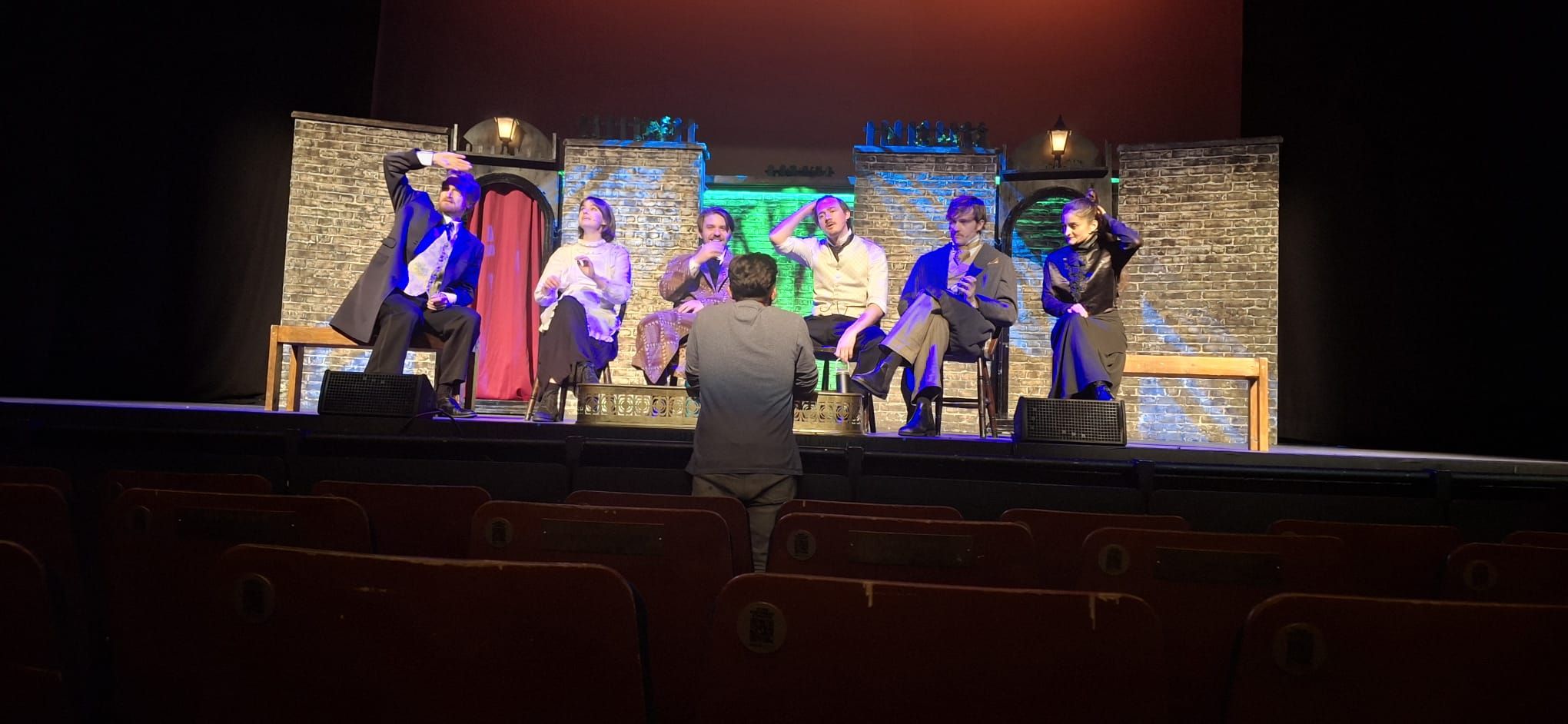
Q and A session with the actors
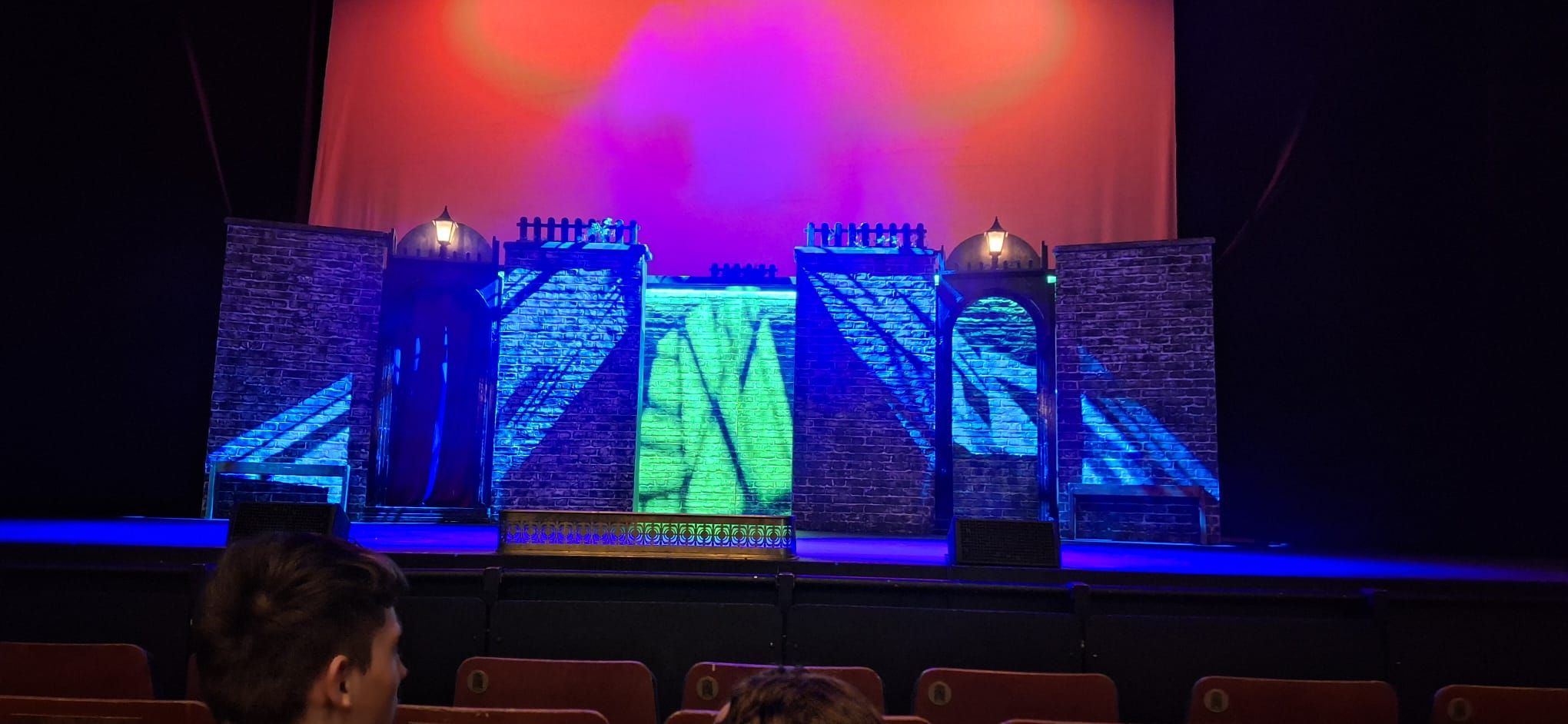
Staging showing choices made around light and dark reflecting themes within the novella.
